By Evan Gray January 20, 2026
High-value events are where catering businesses win big—and where payment friction, fraud, chargebacks, and cash-flow delays can quietly erase margins. The difference between an “okay” payment workflow and a premium one is no longer just the card terminal.
It’s the catering software for high-value event payments you choose, how it handles proposals and deposits, how it automates invoices and reminders, and how it reduces risk when a client is placing a five-figure order for a wedding, corporate gala, or multi-day conference.
Modern catering software for high-value event payments sits at the center of your sales pipeline: it turns leads into quotes, quotes into contracts, and contracts into paid events—without spreadsheets, back-and-forth emails, or manual reconciliation.
It also needs to support real operational complexity: multiple payment milestones, add-on orders, bar packages, venue fees, staffing surcharges, rentals, and last-minute changes that can swing totals dramatically.
Meanwhile, clients expect instant, polished, mobile-friendly checkout options. They want to pay with card, bank transfer, digital wallets, or even same-day methods—then immediately receive receipts and confirmation.
Security and compliance have also moved from “nice-to-have” to mandatory, especially as standards tighten. For example, PCI Security Standards Council guidance notes that future-dated PCI DSS v4.x requirements come into effect March 31, 2025, raising the bar on how payment data is handled.
This guide explains what best-in-class catering software for high-value event payments should do in 2026, how to design payment schedules that protect revenue, which security controls matter most, and what the future looks like for instant payments and on-site acceptance.
What Makes High-Value Event Payments Different (And Why Generic Tools Fail)

High-value catering payments are not “checkout.” They’re a staged financial relationship that begins at booking and ends after final headcount, event execution, and sometimes post-event damage or overage reconciliation. If your system was built for quick-service tickets or basic invoicing, it usually breaks under the weight of high-value event complexity.
A real catering software for high-value event payments setup must manage at least five realities. First, payment timing: clients rarely pay in full upfront. They pay a booking deposit, then progress payments, then a final balance after headcount or menu adjustments.
Second, scope drift: premium events evolve—added hors d’oeuvres, upgraded rentals, late-night snacks, additional bartenders. Your payment workflow must adapt without creating confusion or disputes.
Third, risk increases with ticket size. Fraudsters target larger payments; legitimate customers may later dispute charges if contracts and change orders aren’t crystal clear. Fourth, cash flow matters more.
When you’re floating labor, inventory, rentals, and venue coordination, a delayed payment can force you to borrow or cut quality. Fifth, client experience is part of your brand. A frictionless, professional payment experience reinforces “premium,” while clunky links and manual receipts raise doubt.
This is where catering software for high-value event payments becomes a strategic advantage. It isn’t just a way to accept money—it’s a way to reduce disputes, improve conversion, and speed up receivables while staying aligned with modern security expectations.
Core Features Your Catering Software Must Have for High-Value Event Payments
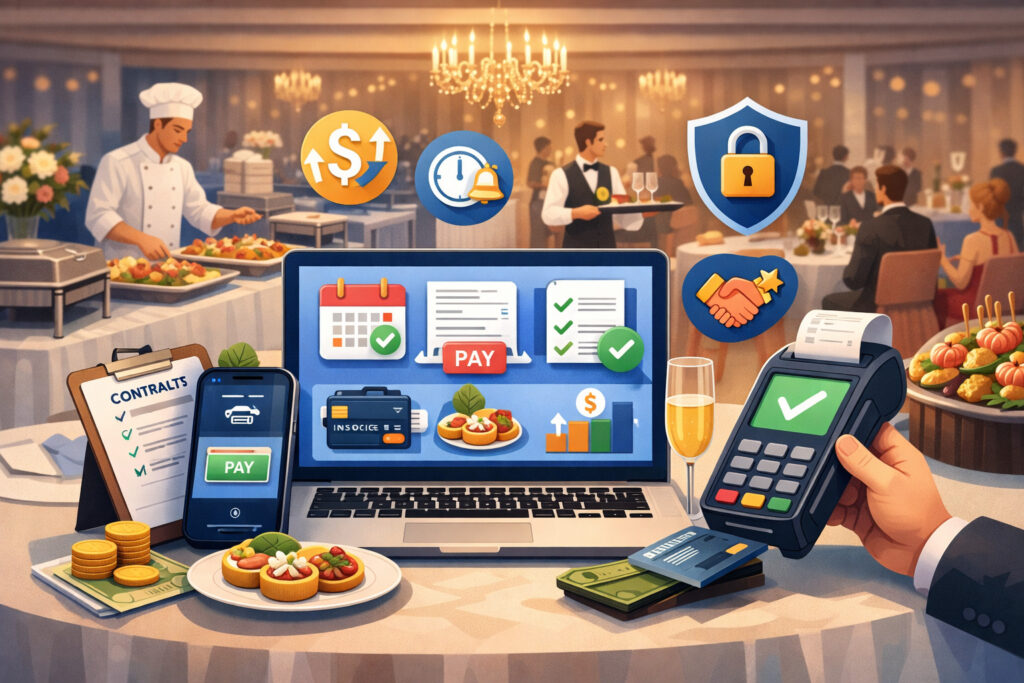
When evaluating catering software for high-value event payments, ignore feature lists that sound impressive but don’t address real-world workflows. The goal is to shorten the time from proposal to paid booking, minimize manual admin work, and reduce payment risk.
At minimum, your platform should support: professional proposals, e-sign contracts, automated invoicing, deposit collection, milestone billing, and real-time payment status tracking.
It should allow partial payments, split payments (common for corporate events or co-hosted weddings), and event-based add-ons that automatically update totals. It must also produce clean records for accounting—line items, taxes, service charges, tips (if applicable), and gratuity handling that matches how your business operates.
A strong catering software for high-value event payments also needs robust customer communication tools. Automated reminders reduce late payments without awkward calls.
Payment links should be branded, mobile-friendly, and consistent across proposal, invoice, and receipt. If you take payments on-site, the platform should keep those transactions tied to the event record—no “mystery transactions” that force your team to guess what got paid.
Finally, do not overlook integration depth. The best catering software for high-value event payments integrates with accounting, CRM, email/SMS, payroll or scheduling tools, and inventory/rental systems.
Integration reduces errors and keeps your books clean—especially when you’re handling high-dollar events where one mismatched payment can take hours to reconcile.
Proposal-to-Payment Automation That Converts Premium Clients
Premium clients want confidence: clear scope, transparent pricing, and a checkout flow that feels secure. Your catering software for high-value event payments should let a client approve a proposal, sign the agreement, and pay a deposit in one seamless journey—ideally from their phone.
Look for dynamic proposals with optional upgrades (e.g., “add raw bar,” “upgrade to premium spirits,” “add late-night station”). These should become formal line items that flow into the invoice and contract automatically. That reduces misunderstandings and makes disputes less likely.
The strongest systems also support automated “next steps” once a deposit clears: confirmation emails, calendar updates, internal task creation, and scheduled invoices for later milestones.
This is where catering software for high-value event payments stops being “admin” and becomes a sales engine. The faster and cleaner the booking process is, the more likely high-value clients are to commit.
Multi-Milestone Invoicing, Deposits, and Final Balance Workflows
High-value events often require 3–5 payments. Your catering software for high-value event payments should allow you to define templates like:
- Booking deposit due at signing
- Second payment due 60 days out
- Third payment due 14 days out
- Final true-up due after final headcount (or after event, depending on policy)
It should also support “true-up” invoices when headcount changes or add-ons are approved, while preserving an audit trail of what changed and why. That audit trail is a major chargeback defense tool.
If you manage recurring corporate catering or multi-day events, milestone billing should also handle date-based splits by service day or by venue. This is where generic invoicing tools struggle. A purpose-built catering software for high-value event payments keeps everything linked to the event, ensuring every invoice, payment, and adjustment has context.
Payment Methods That Matter Most for High-Value Catering Events in 2026
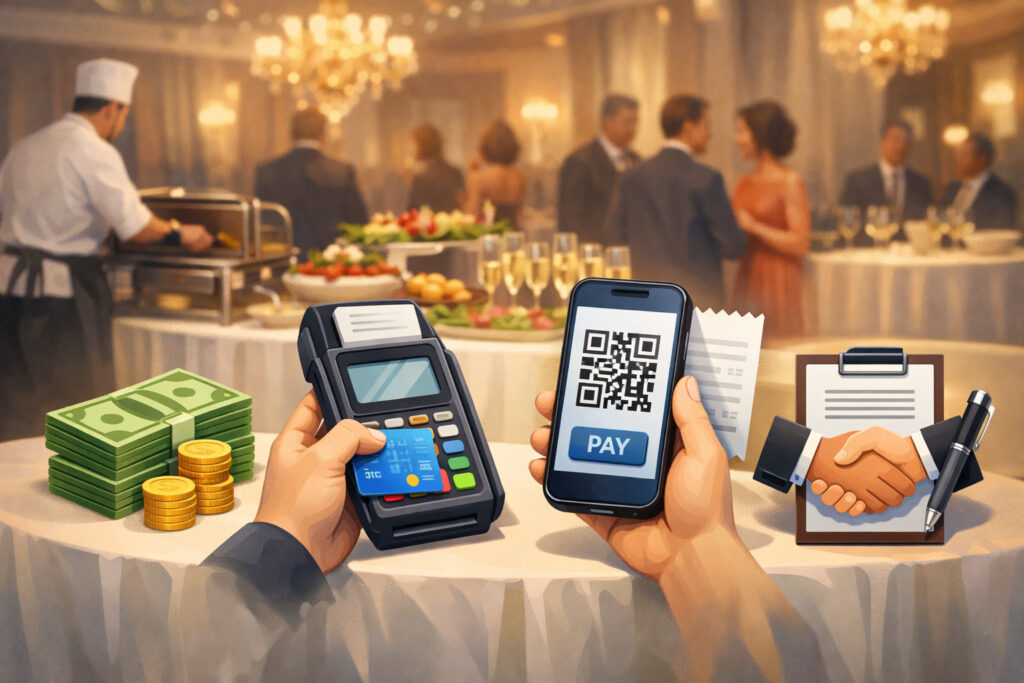
A premium payment experience gives clients choice while protecting your margins. The best catering software for high-value event payments supports multiple rails and lets you steer customers to the most cost-effective options when appropriate.
Cards remain essential, especially for deposits. Digital wallets are now expected for in-person payments and sometimes even remote transactions. Bank payments (ACH) are increasingly common for large invoices because clients want lower fees and higher limits. Instant payments are also evolving, and they’re starting to matter for last-minute changes.
The Federal Reserve describes FedNow as a 24x7x365 instant payments platform and has highlighted ongoing growth and innovation milestones.
While not every client will use instant payments today, your catering software for high-value event payments strategy should anticipate rising demand for faster settlement—especially for corporate clients that want immediate confirmation.
Cards, Digital Wallets, and On-Site Contactless Acceptance
On-site acceptance is no longer just a terminal on a folding table. With features like Tap to Pay on iPhone, merchants can accept contactless payments through a compatible phone using a supported payment app, simplifying field operations. For caterers, this matters when collecting last-minute upgrades, bar overages, or final payments at venue walkthroughs.
Your catering software for high-value event payments should support contactless acceptance without creating reconciliation chaos. A “standalone” mobile payment app is risky if transactions don’t automatically map to the correct event record. That’s why unified systems—where on-site payments automatically attach to the event—are a major advantage.
Also consider authorization tools. For high-value cards, the ability to run partial authorizations, use pre-authorizations where allowed, and capture later (depending on your setup) can reduce risk. The right catering software for high-value event payments helps you choose these settings responsibly and transparently.
Bank Payments, Account Validation, and the Shift Toward Faster Settlement
High-value clients often prefer bank payments for large balances, but bank payments create different risks. Account entry errors, fraud, and disputes can occur if workflows are sloppy. Nacha guidance emphasizes account validation for WEB debit entries as part of commercially reasonable fraud detection.
That means your catering software for high-value event payments should support secure bank-payment flows, clear authorization language, and validation practices that reduce return risk. It should also automate reminders and provide client-friendly confirmation.
In 2026 and beyond, expect more caterers to offer multiple settlement speed options. Standard bank payments may be fine for scheduled milestones, but instant payments can be valuable for same-week event changes.
Building your catering software for high-value event payments stack around flexible rails gives you leverage: better cash flow, fewer awkward follow-ups, and faster confirmation when you need it.
Security, Compliance, and Fraud Controls for Premium Catering Transactions
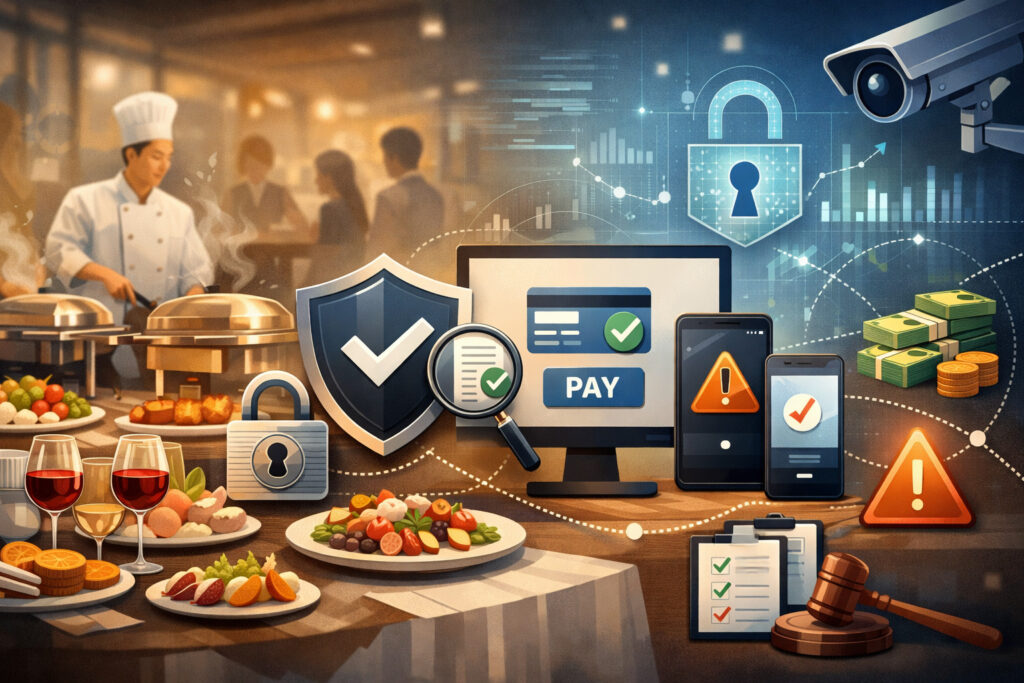
High-value events attract both legitimate big spenders and opportunistic fraud. Your catering software for high-value event payments must reduce risk without making clients jump through hoops.
That balance requires layered security: strong authentication, clean contracts, limited exposure to sensitive data, and operational controls that prevent internal mistakes.
PCI compliance is a cornerstone. PCI Security Standards Council has communicated that additional PCI DSS v4.x requirements become effective March 31, 2025. Practically, this means you should avoid storing payment data yourself and instead use tokenization and hosted payment pages provided by your payments partner. The less payment data you touch, the lower your risk.
Fraud controls also include velocity rules (limits on repeated attempts), device and location checks, and clear internal review thresholds.
For example: “Any first-time client invoice over $7,500 requires a signed contract and verified contact details before accepting payment.” Your catering software for high-value event payments should make these policies easy to enforce.
PCI DSS 4.0 Readiness, Tokenization, and Data Minimization
PCI DSS 4.0 pushes organizations to strengthen authentication, access controls, and security processes. One practical takeaway for caterers is to centralize payment collection through systems that reduce exposure. Use hosted checkout pages, avoid emailing raw invoices with sensitive details, and ensure staff access is role-based.
Tokenization is especially important. In a modern catering software for high-value event payments workflow, a client’s payment method is converted into a token that can be used for permitted billing actions without revealing the underlying account details. This reduces the chance that your team mishandles sensitive data and lowers breach risk.
Also consider staff training and operational hygiene: unique logins, multi-factor authentication, and strict permissions. High-value event payments often involve assistants, planners, and venue coordinators.
Your catering software for high-value event payments should allow limited access so people can do their job without seeing more than they need.
Chargeback Prevention: Contracts, Change Orders, Evidence, and Messaging
Chargebacks are not just a payment issue—they’re a documentation issue. The best defense is clarity: contracts that match invoices, change orders that capture scope shifts, and communication logs that show client approval.
Your catering software for high-value event payments should keep signed agreements, itemized invoices, delivery schedules, and approval timestamps together. If a dispute occurs, you need to quickly produce: what was sold, when it was approved, what was delivered, and how the client engaged.
Proactive messaging helps too. Automated receipts, reminders before milestone due dates, and “review your final details” confirmations reduce surprises. Surprises create disputes. A premium catering software for high-value event payments experience prevents surprises by keeping every change visible, approved, and recorded.
Designing a Payment Schedule That Protects Profit and Improves Client Trust
Payment schedules are where catering businesses quietly win or lose. A strong catering software for high-value event payments platform helps you operationalize policies that protect cash flow while staying client-friendly.
Start by aligning payments to your cost exposure. Your deposit should cover early planning time and initial procurement risk. Subsequent milestones should cover labor scheduling, vendor commitments, and rentals.
The final balance should be due before you’re most exposed—often before the event date—unless your business model has a reason to allow post-event settlement.
Use clear triggers: “final headcount due by X,” “final invoice generated within 24 hours of headcount confirmation,” “final payment due within Y days.” Then automate it. When policies are automated, they’re consistently enforced, and clients perceive consistency as professionalism.
Your catering software for high-value event payments should also support exceptions without losing control. VIP clients, corporate accounts, or long-term partners may negotiate different terms. The system should allow custom schedules while keeping the same audit trail and reminders.
Deposits and Cancellation Policies That Reduce Revenue Leakage
Cancellation risk is real in high-value events. Your deposit and cancellation policy should reflect the time and costs you incur as you plan. A deposit that’s too small leaves you exposed; too large can scare off clients.
The right catering software for high-value event payments helps you test and optimize these policies by tracking conversion, time-to-pay, and late-payment rates.
Cancellation language must match your invoicing. If a portion is non-refundable after a certain date, your system should reflect that in the payment schedule and contract. Consistency reduces disputes and chargebacks.
Also consider “rescheduling” scenarios. Premium clients may postpone rather than cancel. A strong catering software for high-value event payments workflow supports applying credits, moving balances forward, and issuing updated schedules without messy manual adjustments.
Large-Order Limits, Split Payments, and Corporate Approval Chains
Corporate events often require purchase orders, department approvals, or split billing between entities. If your system can’t handle this, your team will default to manual workarounds—and manual workarounds create errors.
Your catering software for high-value event payments should support:
- Multiple contacts tied to one event (planner, finance, approver)
- Split invoices (e.g., food vs. bar billed separately)
- Payment links sent to different stakeholders
- Approval tracking and notes
It should also handle payment limits intelligently. Some clients will hit card limits on large transactions. If your platform can split a payment across two cards or offer bank transfer options, you’ll close deals faster. This is another way catering software for high-value event payments improves conversion.
Integrations and Back Office: Accounting, Reconciliation, Reporting, and Taxes
High-value events create complex books. You’re dealing with deposits (often liabilities until earned), partial revenue recognition, refunds, service fees, taxes, and tips depending on your model. The right catering software for high-value event payments reduces the accounting burden by keeping clean, structured data from the start.
At a practical level, you want: automated reconciliation, consistent chart-of-accounts mapping, event profitability reporting, and detailed transaction logs. Your system should tie each payment to a specific invoice and event, showing what’s paid, what’s pending, and what changed.
If you run multiple teams or locations, reporting should separate performance by salesperson, event type, venue partner, or season. High-value catering is often seasonal, and knowing your cash flow forecast matters for hiring and inventory planning.
Taxes and fees can be tricky. Depending on local rules and how you structure service charges, your invoicing must clearly identify taxable vs non-taxable components. A strong catering software for high-value event payments platform supports configurable tax rules, service fees, and gratuity handling with transparent line items.
Accounting Sync, Deposit Liability Tracking, and Audit-Friendly Books
If your accounting sync is shallow, your team ends up doing double entry—once in the catering system and again in the books. That’s expensive and error-prone. The best catering software for high-value event payments tools push structured invoice and payment data into accounting, preserving customer, event, and line-item detail.
Deposit tracking is a big deal. Deposits often sit as liabilities until the service is delivered. Even if you don’t do formal revenue recognition, you still want clear visibility for cash flow forecasting and refunds.
Audit-friendly records also matter if a dispute escalates. When every payment is linked to an invoice, contract, and event, your documentation is strong.
Performance Analytics: Margin by Event, Payment Speed, and Dispute Rates
If you want to grow premium catering, measure what premium clients care about: responsiveness, clarity, and reliability. Your catering software for high-value event payments should provide analytics like:
- Average time from proposal sent to deposit paid
- Late payment rate by client type
- Upsell acceptance rate (add-ons)
- Average margin by event category
- Chargeback and dispute rate
These metrics let you refine your payment schedule, improve your proposal package, and train staff. They also help you decide whether to encourage bank payments for large balances or to absorb card fees for certain premium packages.
Future Predictions: Where High-Value Catering Payments Are Headed
The next wave of catering software for high-value event payments will be shaped by instant payment adoption, stronger security expectations, and more automation around risk and compliance.
First, instant payments will keep growing. The Federal Reserve continues to position FedNow as a 24x7x365 instant payment rail and highlights ongoing expansion and use cases. For caterers, this means faster confirmation for late changes and potentially fewer “pending” periods that disrupt operations.
Second, payment acceptance will get more mobile. Tap-to-phone style acceptance is becoming mainstream, and Apple’s business documentation emphasizes that Tap to Pay on iPhone allows acceptance with only an iPhone through a payment app.
Expect more catering teams to accept payments during tastings, walkthroughs, and day-of coordination without carrying extra hardware—while still keeping everything tied to the event record in catering software for high-value event payments.
Third, compliance expectations will rise. With PCI DSS v4.x future-dated requirements effective March 31, 2025, more platforms will push merchants toward stronger authentication, better access controls, and tighter payment-data handling.
Finally, AI-driven workflow automation will become standard: fraud scoring, smart reminders that adapt to client behavior, automated change order suggestions, and event profitability forecasting. The winners will be the businesses that treat catering software for high-value event payments as a revenue engine—not just an admin tool.
FAQs
Q.1: What is the best catering software for high-value event payments?
Answer: The best catering software for high-value event payments is the one that matches your operational workflow and reduces payment risk. Look for event-based records (not just invoices), proposal-to-contract-to-payment automation, milestone billing, and clean reconciliation.
For high-ticket catering, you also want strong audit trails: signed approvals, change orders, and payment confirmations in one place. A “best” choice is usually the platform that can handle deposits, add-ons, and final true-ups without manual workarounds. When evaluating options, prioritize integration quality and how well the system supports disputes and documentation.
Q.2: How can catering businesses reduce chargebacks on large event invoices?
Answer: Chargebacks drop when you remove ambiguity. Use catering software for high-value event payments that captures signatures, stores contracts, logs change orders, and sends itemized receipts automatically. Make sure invoices match contract language and that every add-on is approved before billing.
Automated reminders also help—many disputes come from clients forgetting what they agreed to weeks earlier. A strong evidence package—contract, approval timestamps, communication logs, and delivery details—makes a major difference if a dispute happens.
Q.3: Should I accept bank payments for high-value catering events?
Answer: Bank payments can be excellent for high-value balances because they often reduce processing costs and avoid card limits. The trade-off is that bank payments require clean authorization language and good fraud controls.
Nacha emphasizes account validation practices for WEB debits as part of fraud detection expectations. If your catering software for high-value event payments supports secure bank-payment workflows, clear client confirmations, and reliable reconciliation, bank payments can improve margins and reduce friction for corporate clients.
Q.4: What payment schedule works best for high-value catering events?
Answer: Most premium caterers use a deposit plus 2–3 milestones, ending with a final payment before the event date or tied to final headcount approval. Your catering software for high-value event payments should let you template schedules while supporting exceptions for corporate accounts.
A strong schedule aligns payment timing with your cost exposure: deposits cover planning time, milestones cover staffing and rentals, and final balances reduce your risk right before service. The key is consistency and automation—clients trust a system that’s clear and predictable.
Q.5: How do I stay compliant with modern payment security expectations?
Answer: Use catering software for high-value event payments that minimizes your exposure to payment data through hosted checkout and tokenization, and enforce role-based access plus multi-factor authentication.
PCI’s guidance notes the shift toward meeting future-dated PCI DSS v4.x requirements effective March 31, 2025. Even if you’re not a technical team, you can stay safer by choosing payment partners that keep sensitive data off your systems and by training staff to avoid risky behaviors like sharing login credentials or collecting payment info through email.
Conclusion
High-value events demand more than “take a payment and send a receipt.” They require a complete system that connects sales, contracts, invoices, deposits, change orders, and on-site acceptance into one clean workflow.
The right catering software for high-value event payments improves conversion, accelerates cash flow, reduces disputes, and delivers a client experience that matches the premium service you provide.
In 2026, the winners will be catering businesses that standardize milestone billing, automate reminders, and keep a defensible record of approvals and changes.
They’ll also prepare for the future: instant payments expanding through rails like FedNow, more mobile acceptance through tap-to-phone models, and rising security expectations driven by modern compliance standards.